✨
- Mon- Sun 8.30AM – 7PM
- +971 553119743
- +971 54 329 1664
- austincntr@gmail.com
10+ Years History of Pediatric Therapy | 3000+ Children Served in UAE
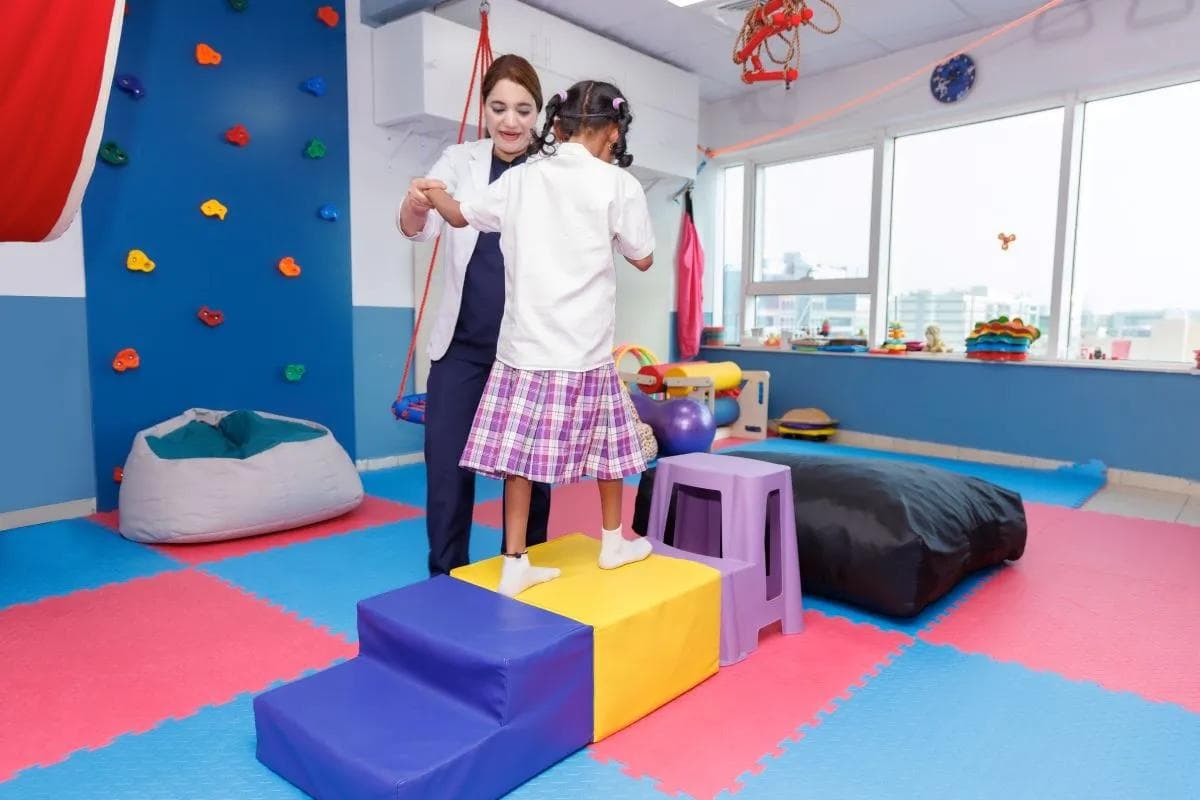
At Austin Center, Al Nahda, Sharjah, we work with children to develop the necessary skills for daily living, learning, play and independence. No need for childcare assistance for your child—our occupational therapists can assist your youngster with fine motor skills, sensory processing, attention and daily living tasks.




4.9/5 Rating
Trusted by 2,000+ families
10+ Years
Pediatric care
20+ Years
Led an early Us BACB-certified Behavior Analyst
3000+
Children support
Multi
Disciplinary team approach
Dubai + Sharjah
Multiple UAE Branches (Alnahda Sharjah & Karama)
Parent-first
Family-centered guidance
Occupational Therapy for children is a pediatric therapy that helps develop fine motor skills, sensory processing, attention, and independence in daily activities. It supports children with autism, developmental delays, and learning difficulties in achieving key functional milestones.
Families often seek OT when children face challenges with handwriting, coordination, sensory sensitivities, self-care, or classroom participation at Austin Center, Al Nahda, Sharjah.
Many Dubai parents come to us after months of quiet worry. A working mother notices her toddler still isn't putting two words together. A father hears the same feedback at every PTM: "He's bright, but he doesn't speak up in class."
Nursery teachers gently mention that your child gets frustrated, points instead of asking, or struggles to follow simple instructions. At home, mealtimes and bedtime turn into guessing games-and tantrums.
None of this means anything is "wrong" with your child. It just means they need the right support, early.
When to Seek Occupational Therapy
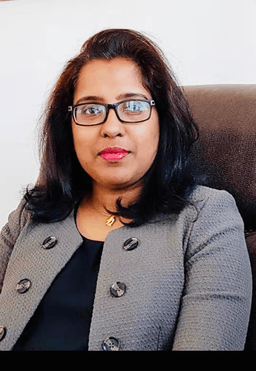
Author " Asha Susan, BACB (USA) & IBA Certified Behavior Analyst Email - asha.austin@gmail.com
Occupational therapy helps children learn how to participate in life’s daily tasks.
Based on the child’s needs, occupational therapy can focus on fine motor skills, gross motor skills, sensory processing, attention, self-care skills and independence with all aspects of daily life.
Occupational therapy is focused on helping children thrive and feel confident to participate in activities with family, school, and a variety of everyday life tasks such as writing, feeding, dressing, and playtime.
A child may need occupational therapy if they have difficulty with handwriting, holding handheld items, have poor coordination, are sensitive to touch or other sensory experiences, have difficulty with attention or focus, or have difficulty with self-care skills such as feeding and dressing.
Occupational therapy can help children with autism spectrum disorders, ADHD, developmental delays, sensory processing challenges and learning challenges increase independence with daily tasks and better ability to participate in school setting life.
Occupational therapy helps children with hand and wrist control, coordination, balance and sensory regulation for independent participation in activities of daily living, school readiness and task completion.
Occupational therapy helps children be more independent, confident and active participants in their home, school and community life.
Early occupational therapy helps children build confidence, independence, and improved functional skills in everyday life.
Supports developing motor, coordination and sensory skills.
Identifies developmental challenges before they
Improved Fine Motor Skills -Early intervention of delays supports the development of handwriting, grasp, dressing/undressing and manipulation of objects.
Builds skills for classroom tasks, attention and participation.
Supports balance, coordination, posture and movement.
Helps children manage responses to touch, sounds, movement and other sensory input.
Helps children participate more confidently in everyday activities.
Supports feeding, dressing, hygiene and other self-care skills.
Addresses challenges that may affect participation at home, school and in the community.
Gives parents practical strategies to support progress at home.
Provides families access to individualized developmental support close to home.
Combines assessment, individualized therapy and parent education to support functional development.
Many families come to us after trying different approaches and often tell us they were looking for clearer guidance and more coordinated support.
Easily accessible for families in Al Nahda, Al Taawun, Al Majaz, Al Qasimia, and Abu Shagara, reducing travel stress for regular therapy sessions and follow-ups.
Integrated support including occupational therapy, speech therapy, behavior therapy, and developmental psychology for complete child development management.
Therapists coordinate with Sharjah nurseries and schools to support handwriting, attention, classroom behavior, and functional participation goals.
Parents are trained with practical, evidence-based OT strategies to improve daily routines such as dressing, feeding, handwriting, and self-care skills at home.
Led by qualified pediatric therapists working within internationally recognized frameworks for autism, developmental delay, and sensory processing challenges.
Child-centered, play-based occupational therapy sessions designed to improve engagement, motor planning, coordination, and sensory regulation.
Focus on early identification of sensory, motor, and developmental delays to support better long-term independence and functional outcomes.
Each child receives a personalized OT plan based on assessment, developmental level, and measurable functional goals.
Families are actively involved in goal setting, therapy planning, and progress reviews to ensure consistent improvement at home and clinic.
All therapies are coordinated across specialists to ensure consistent, structured, and holistic developmental support.
A safe, engaging, and child-friendly environment that encourages participation, confidence building, and independence in daily activities.
See why thousands of parents trust our specialized, multidisciplinary approach over standard clinical settings when it comes to their child's development.
| What parents compare | Austin Center | Typical clinics |
|---|---|---|
| Pediatric-focused experience | 10+ years specialized pediatric OT, speech & developmental therapy in UAE | General mixed-age therapy practice |
| Clinical leadership | 20+ years US BACB-certified senior consultant-led clinical oversight | Junior therapists or rotating supervision |
| Children supported | 3000+ pediatric cases across Dubai & Sharjah | Limited documented or tracked caseload |
| Parent coaching | Fully integrated into every therapy plan with home strategies | Often optional or separately provided |
| School coordination | Active collaboration with Sharjah & Dubai nurseries and schools | Rare or informal coordination |
| Multidisciplinary team | OT, speech therapy, behavior therapy & psychology under one integrated system | Smaller, fragmented service setups |
| Senior Supervision | Structured clinical reviews every 8–12 weeks for progress optimization | Inconsistent or minimal supervision |
| School readiness & mainstreaming | Strong outcomes in functional independence and school transition | Limited measurable developmental outcomes |
| Cost efficiency | Targeted goals → faster progress & reduced long-term cost | Longer therapy duration & higher cumulative cost |
| Early intervention | Strong emphasis on early developmental screening | Often delayed, reactive referrals |
The first meeting is relaxed and non-judgemental, exploring concerns about child’s motor, sensory, attention and life independence.
A play-based, evidence-based assessment of fine motor, gross motor, sensory function, self-care and functional performance in line with pediatric occupational therapy practice and models such as American Occupational Therapy Association’s guidelines.
A structured, outcome-oriented therapy plan developed based on developmental assessment and testing results with focus on the child’s developmental level and primary functional needs such as handwriting, dressing, feeding and attention.
Occupation based sessions for improved fine motor, sensory integration, coordination, motor planning and life independence.
Parents are trained in a range of practical, evidence-based OT programs and strategies for their child to support dressing, writing, feeding, behaviour and sensory needs at home.
Reassessment occurs 8–12 weeks after commencing therapy to review child’s developmental progress, adjust or set new functional goals and track his/her independence and school readiness.
"He went from 5 words to full sentences in 6 months."
A mother from Karama, Dubai came to us last year-her 3-year-old son had only five words and his Bur Dubai nursery had just shared a worried PTM report. She was exhausted, googling "speech therapy near me" every night after her commute home.
We started gentle play-based sessions twice a week, paired with simple home routines built around his existing iPad time and family Malayalam-English mix. By month three he was stringing two words together. By month six he was telling his grandmother-in full sentences-about the camel he saw in Al Qudra.
"I have seen my son's ability to focus and attention improve significantly in the fourth month after starting his session, at Austin for aba and OT. They will instruct you on what to do and therefore we are also encouraged to follow-up at home. Looking forward to more improvement in the near future!A..."
"“My 2 months with Austin Centre has been a phenomenal experience! Our son has made really good progress since joining Austin Centre, thank you for all the expert guidance and support from Ms. Anu, Ms. Khadeeja and Ms. Varshini, you guys have been a great help in our son's journey!"
"Therapist Sherly at Austin Center, Al Nahda, Sharjah has been brilliant in supporting my 4.5 year old son who was having meltdowns and was not going to school on a daily basis, she clearly explained to me the science behind what was happening in his brain and gave me some simple and practical inform..."
"The Austin Center has made a world of difference for my son. Therapists are skilled and passionate in helping children. My son has seen a lot more development in his fine motor skills since he began occupational therapy. The sensory integration therapy has also been a tremendous success and has been..."
Behavior Analysis Standards
Dubai Health Authority Compliance
Approved Educational Therapy Practices
Sharjah Health Authority Guidelines
Rehabilitation Council of India Standards


Swipe to see more
Everything you need to know about our platform.
Stay Updated
Explore professional guidance, updates from our center, and actionable resources designed to support development and therapy transitions.
Simple, practical strategies to help children with autism improve handwriting, pencil control, fine-motor skills, posture, and writing confidence.
Every child learns and develops in their own unique way. For children with Autism Spectrum Disorder (ASD) and other developmental challenges, learning certain skills may require additional support and structured guidance. Applied Behavior Analysis (ABA) Therapy is one of the most widely researched and effective approaches for helping children develop communication, social, behavioral, and daily living skills.
Every child develops communication skills at their own pace. However, when a child struggles to speak, understand language, or communicate effectively, it may indicate the need for professional support. Speech therapy helps children improve their communication abilities, build confidence, and develop essential social skills.
4.9/5 Rating
Trusted by 2,000+ families
Call us
+971 54 329 1664
971553119743
Visit us
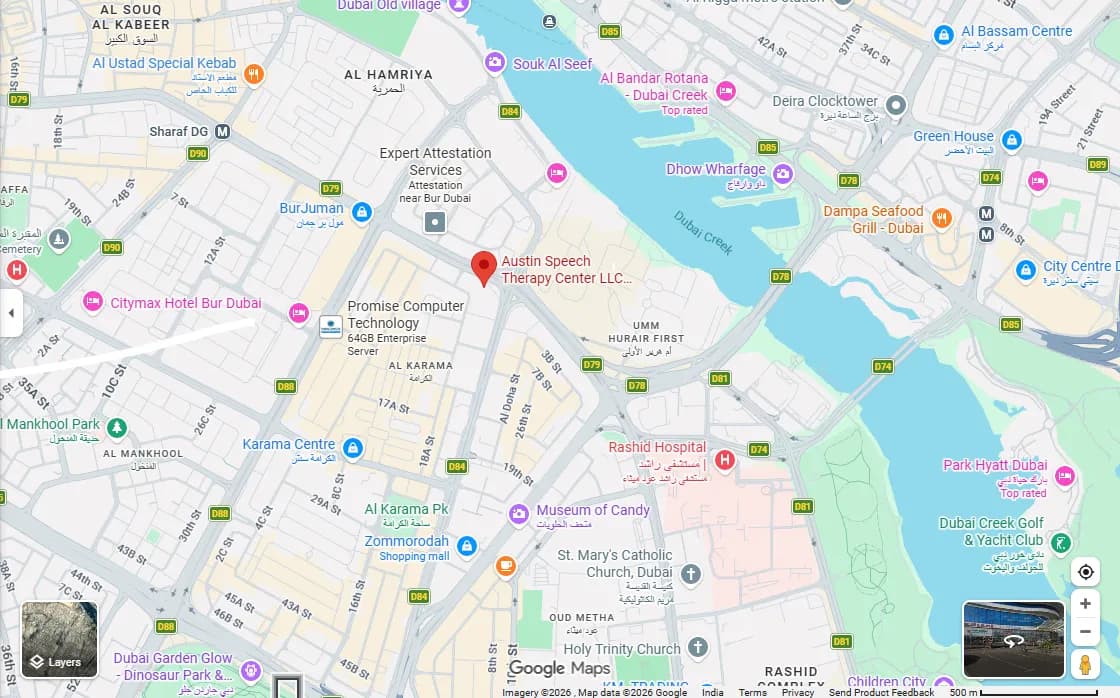
Ansar Gallery Building, Karama, Dubai
Mon-Sat • 9:00 AM - 8:00 PM
Visit us
Al Nahda Clinic, Sharjah
Mon-Sat • 9:00 AM - 8:00 PM
Metro
5 min walk from ADCB / BurJuman
From Bur Dubai
10 min — easy parking
From Deira
15 min via Maktoum Bridge
From Al Qusais
20 min via Sheikh Rashid Rd
From Al Nahda, Sharjah
20 min — near Dubai border